Bhai Dooj 2026 on Wednesday 11 November: the thali, the order of the tilak, and how each region keeps it
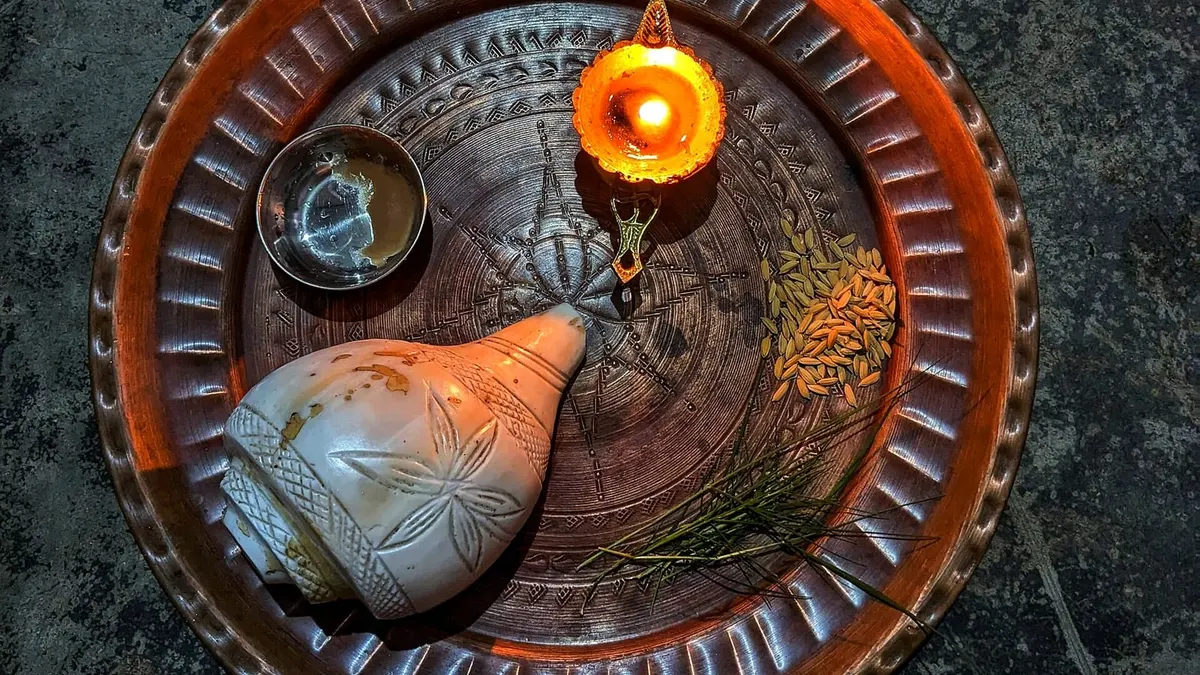
The brother sits on a low wooden stool, a little embarrassed, while his sister fusses with the thali. The lamp keeps going out because someone opened the door. The aunts give advice. Then the tilak goes on, the sweet goes in, and he hands over an envelope he has clearly been told how much to put in. Every family has a version of this morning.
The date
Bhai Dooj falls on Wednesday, 11 November 2026, India (IST, New Delhi). It is Kartika Shukla Dwitiya, the second day of the bright fortnight, and it closes the Diwali festival. The Bhai Dooj page has the dates for the coming years.
Most panchangs give an afternoon window (aparahna) as the best time for the tilak. In practice most homes do it in the late morning, before the festive lunch, and that is fine. If your family follows a priest's muhurat, ask him for this year's time.
North America: we do not give a Toronto or Vancouver date, because we could not confirm one in two independent calendars. The second-day tithi begins in the early hours of Tuesday 10 November by Toronto time, so a local panchang may well list Tuesday. Ask your temple, or simply keep the day your family in India keeps.
Why sisters do this
The story told in most homes is about Yama, the lord of death, and his sister Yamuna. She asked him again and again to visit her, and he finally came on this day. She welcomed him, put a tilak on his forehead and fed him a meal she had cooked. He was so pleased that he gave her a boon: a brother who visits his sister on this day and eats at her home would be protected. That is why the day is also called Yama Dwitiya, and why the meal matters as much as the tilak.
What to keep on the thali
- A small lamp (diya) with ghee, and a matchbox
- Roli or kumkum for the tilak, and a few grains of unbroken rice (akshat)
- A little water in a small pot or a conch
- A sweet: mithai, a laddoo or whatever your brother likes
- Mauli (the red-and-yellow thread) if your family ties one
- In many north Indian homes, a dry coconut (gola) for the brother
- Flowers or durva grass, and a betel leaf with a supari if your family uses them
Set it up the night before. In the morning there is never as much time as you think.
The order of the tilak
- Both bathe and dress for the day. Many sisters keep a light fast until the tilak is done.
- The brother sits on a low stool or mat. Some families cover his head with a handkerchief.
- The sister applies the tilak with her ring finger, then presses a few grains of rice onto it.
- She ties the mauli if that is the custom, and offers the dry coconut or a gift.
- Arati: she waves the lamp in front of him, usually clockwise, while everyone sings.
- She feeds him a sweet. He gives her a gift and touches her feet if she is older, or she touches his.
- Then the meal. In the Yama story the meal is the point, so cook something he loves.
How different regions keep it
- North India (Bhai Dooj, Bhaiya Dooj): tilak, arati, gola and a big lunch at the sister's home. Married sisters often host their brothers.
- Bengal (Bhai Phonta): the sister fasts until the ritual, then marks her brother's forehead with a paste that usually includes sandalwood, kajal and curd, while saying a traditional rhyme for his long life. A Bengali panjika may place Bhai Phonta on a different day from the north Indian Bhai Dooj in some years, so check yours.
- Maharashtra, Goa and Karnataka (Bhau Beej): an evening aukshan (arati) and a festive meal.
- Nepal (Bhai Tika, during Tihar): sisters apply a tika of several colours (saptarangi) to their brothers' foreheads and pray for their long life. Nepal's Tihar dates follow the Nepali calendar.
- Mathura: brothers and sisters bathe together in the Yamuna at Vishram Ghat. More than a lakh people came in recent years. Many then visit the shrine of Yamuna and Dharmaraj (Yama) at the ghat.
- Kayastha families: the same day is Chitragupta Puja. Pens, ink and account books are placed before Chitragupta, the keeper of Yama's records, and worshipped.
One more thing happens on Bhai Dooj in the Himalaya: by long custom the doors of the Kedarnath temple close for the winter on this day, and the deity's palanquin is carried down to Ukhimath. Reports for 2026 give 11 November; the Badri-Kedar Temple Committee announces the final date.
Aartis and songs for the day
The festival page suggests three:
- Aarti Kunj Bihari Ki, a Hindi aarti most families already know
- Yasomati Nandana, a short Bengali kirtan with a lively refrain
- Om Jai Lakshmi Mata, still fresh from Diwali night
Keep the phone on a stand at eye level and tap Kirtan for big text that stays on screen.
If you are apart
A lot of siblings live in different cities or countries now. Some things help:
- Agree on a time the day before. A morning call in India is a late-evening call in Canada, and the day may already be over for one of you.
- Send the aarti link ahead. Open the aarti on the site, tap Share and send it on WhatsApp, so you both sing the same words.
- If your sibling reads another script more comfortably, show them Read in on the aarti page.
- A sister can put the tilak on her brother's photo, light the lamp and offer the sweet, then send him a picture of the thali. Many families have done this for years.
- Post the sweets early. The courier does not know it is a festival.
Do's and don'ts
- Do eat the meal together, even a simple one. In the story, that is what Yama asked for.
- Do include cousins. In many families the cousin-brothers and cousin-sisters are the ones who are actually nearby.
- Don't turn the gift into a competition. A book, a plant or a handwritten note is a gift too.
- Don't skip it because one sibling is away. Do the part you can.
Questions people ask
Is Bhai Dooj on 10 or 11 November 2026? In India it is Wednesday 11 November. Dwitiya starts on the afternoon of the 10th, but the festival is kept on the 11th.
What if I have no brother? In Maharashtra and Haryana, a woman without a brother traditionally offers the arati to the moon (Chandra) instead. Many women also tie the tilak for a cousin, a friend they call brother, or Krishna himself.
Can a brother do Bhai Dooj for his sister? The custom is the sister's, but nothing stops a brother from cooking the meal, and in many homes he does.
What should the brother give? Whatever is meaningful. Cash in an envelope is common; a gift that she will use is better.
Take one photo of the thali after the arati, before the sweets disappear. In ten years it will mean more than the gifts.