Jagaddhatri Puja 2026 on Wednesday 18 November: Chandannagar, Krishnanagar, and keeping it at home
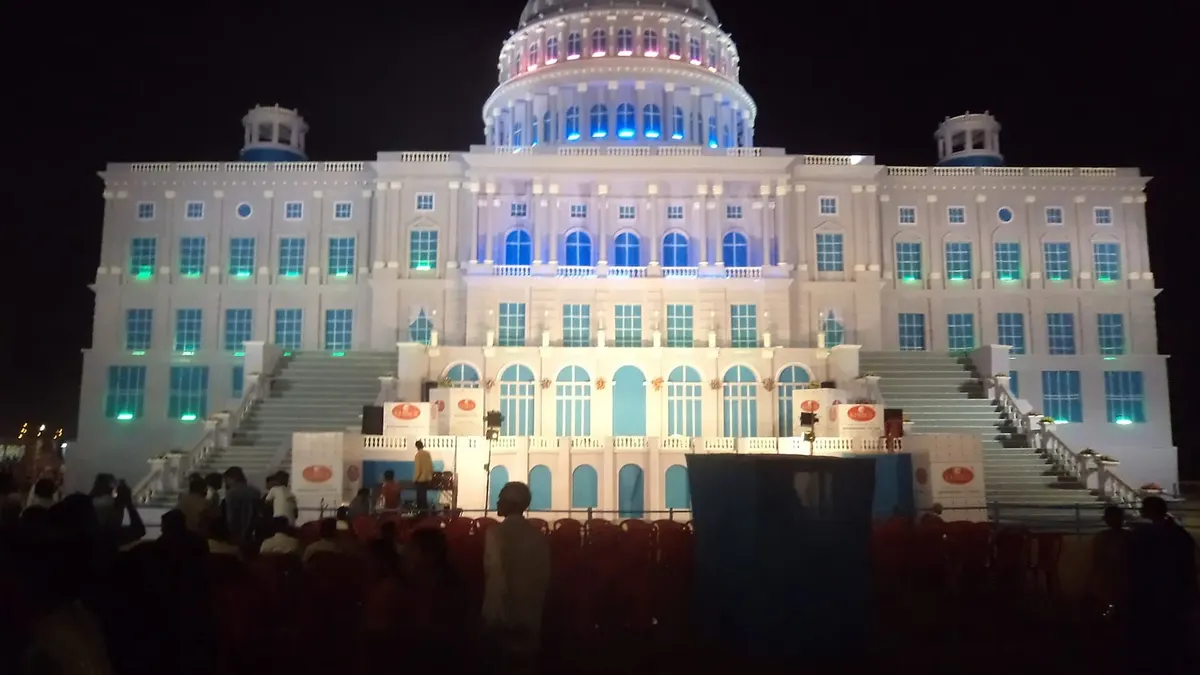
Ask anyone from Chandannagar about November and watch their face change. Durga Puja is a month behind them, Kali Puja has just gone, and still the biggest nights of their year are ahead: the lights, the pandals along the Hooghly, the procession that goes on through the night. For a lot of Bengal, the festival season ends not with Diwali but with Jagaddhatri.
The date
Jagaddhatri Puja: Wednesday, 18 November 2026, India (IST). It is Kartika Shukla Navami, as the site's festival data has it from two agreeing panchangs. The Jagaddhatri Puja page has the dates in coming years.
Some places keep the festival for one day, on Navami. Others, Chandannagar among them, spread it over several days, from Saptami or earlier, with the main puja on Navami and the immersion after it. A Bengali panjika or your local puja committee will have the schedule.
Who Jagaddhatri is
Jagaddhatri means "she who holds the world". She is a form of Durga, worshipped as the goddess who sustains everything. In Bengali images she sits on a lion, with an elephant beneath the lion, and her four hands carry a conch, a discus, a bow and an arrow.
Many Bengali tellings connect her with the story of Uma Haimavati in the Kena Upanishad, where the gods, proud of a victory, are shown that their power was never their own. Her worship is about the same humility: the world is held up by her, not by us.
How it began in Bengal
The popular account credits Maharaja Krishnachandra of Krishnanagar. He was held by the Nawab over unpaid taxes and missed Durga Puja that year; on his return, the story goes, the goddess appeared to him in a vision in the form of Jagaddhatri, and he began her worship. Local historians tell other versions, including one that credits a scholar of Santipur. Chandannagar's own tradition is old too, and grew up in the French-ruled town with merchants as patrons. Sri Sarada Devi, Sri Ramakrishna's wife, kept a Jagaddhatri Puja at her family home in Jayrambati, and it is still observed there.
Chandannagar and Krishnanagar
Chandannagar is famous for its light artists. The town's electricians build moving light displays, whole scenes in bulbs and LEDs, that are later hired by pujas across India. The immersion procession on the last night winds through the town with dozens of lit floats, and it is one of the biggest night processions in the country. Go on a weekday evening if you can; weekends are packed.
Krishnanagar has more than 200 pujas. The best known is the "Buro Ma" (Burima) of Chashapara, worshipped since 1772 and decked each year in a very large weight of gold and silver ornaments. Krishnanagar's immersion has its own custom, the sang, in which the images are carried on the shoulders of bearers through the town.
Keeping it at home
Most families don't install an image at home; they go to the local puja and offer anjali there. If you want to keep the day at home:
- Clean the prayer space in the morning. Place a picture of Durga or Jagaddhatri, a lamp and a small kalash of water.
- Keep red flowers (hibiscus if you can find it), sandalwood paste, a few bel leaves, sweets and fruit.
- Light the lamp and incense. Offer the flowers with folded hands.
- Sing one prayer from the list below, or read a few verses of a longer stotra.
- Offer the sweets, then share them as prasad.
Many Bengali women keep a fast until they have offered anjali on Navami. Follow your family's custom.
Five prayers to the Devi
The festival page suggests these, each with its full text:
- Jai Ambe Gauri, the Hindi aarti
- Durga Chalisa
- Argala Stotram, in Sanskrit
- Chandi Kavacham, in Sanskrit
- Devi Aparadha Kshamapana Stotram, in Sanskrit
Many Bengali families learned their stotras from books printed in Bengali script. On any Sanskrit page, tap Read in and choose Bengali; the words stay the same and only the script changes. Assamese and Odia readers can do the same.
Going to the pandals: do's and don'ts
- Do take the local train from Howrah to Chandannagar or from Sealdah to Krishnanagar rather than driving. Roads close in the evenings.
- Do plan fewer pandals and longer stops if elders are with you.
- Do carry water, a power bank and some cash; card machines fail in crowds.
- Don't push in queues for anjali. Everybody gets a turn.
- Don't leave plastic at the ghats after immersion.
If you are far from Bengal
We do not give a North American date. Bengali associations in Delhi, Bengaluru, London, Toronto and New Jersey sometimes hold a smaller Jagaddhatri Puja, usually on the nearest weekend, so the date your community chooses may differ from India's. At home, a lamp, a red flower and the Jai Ambe Gauri aarti sung together keep the day.
Questions people ask
Is Jagaddhatri Puja the same as Durga Puja? Jagaddhatri is a form of Durga, but the festival is separate, a month later, on Kartika Shukla Navami.
Why is Jagaddhatri Puja held on Navami? That is the tithi on which the tradition worships her. Where the festival runs for several days, Navami is still the main day.
What is the best day to see Chandannagar's lights? Navami night and the immersion night have the most lights and the biggest crowds. The evening before Navami is easier with children.
Shubho Jagaddhatri Puja.