Jagannath Temple, Puri: the story of the wooden deities, Panchuka, Mahaprasad, and what to know before you go
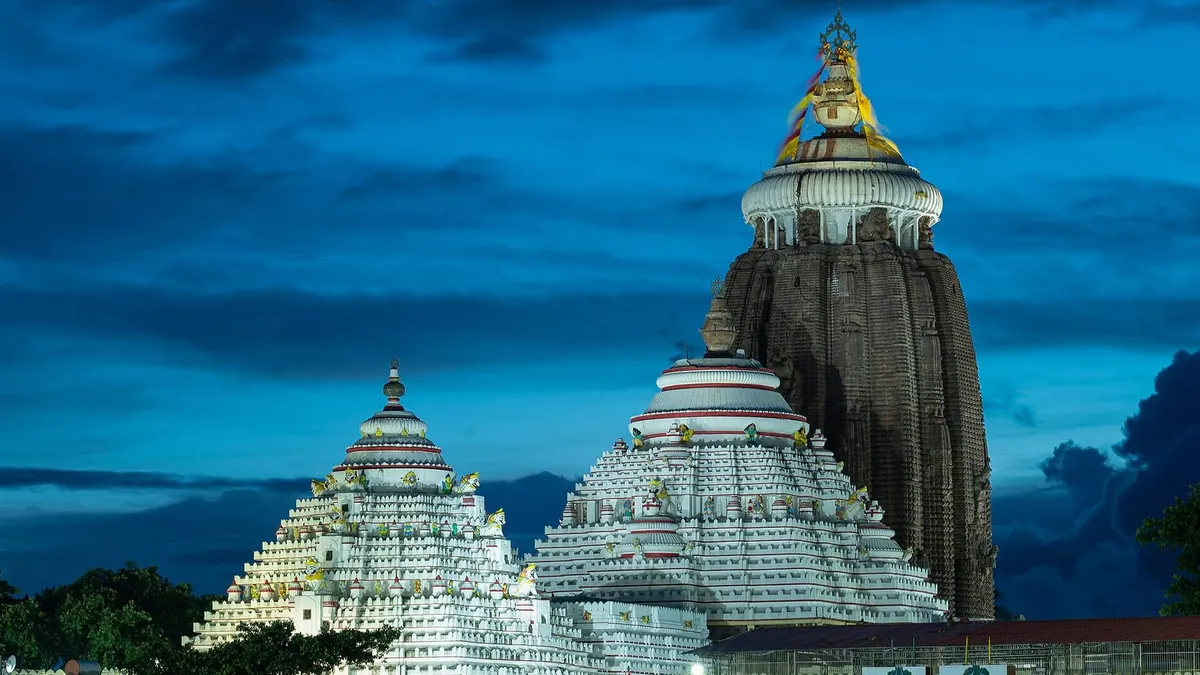
Stand on Bada Danda, the wide road in front of the temple, at about five in the evening, and look up. A man is climbing the outside of the main tower, 65 metres of stone, without a harness, to change the flags on the Nilachakra at the top. People on the road stop, point, fold their hands. The flags come down, new ones go up, and he climbs back down as casually as someone coming off a ladder at home. In Puri this happens every day, and has for as long as anyone can remember.
Why this week
The last days of Kartika, called Panchuka, are the holiest of the month in Puri. Devotees, many of them women who have kept the month-long habisha vow (one simple meal a day), crowd the temple. Each day the deities are dressed in a special besha (costume): the Laxmi Narayan, Tribikram, Laxmi Nrusingha and Raja Rajeswara beshas among them, the last on Kartik Purnima, Tuesday 24 November 2026, India (IST). Reports from Puri say that this year Panchuka lasts four days instead of five because a lunar day is dropped, and the Bankachuda besha will not be held. The Shree Jagannath Temple Administration publishes the exact schedule.
The story of the place
The temple's tradition, told in the Purushottama Kshetra Mahatmya of the Skanda Purana and in Odisha's own retellings, begins with King Indradyumna of Malwa, who longed to see Vishnu as Nila Madhava. The deity was secretly worshipped in the forest by Viswavasu, a chief of the Sabara tribe. The king's priest, Vidyapati, married Viswavasu's daughter, found the shrine, and brought word back, but by the time the king came, Nila Madhava had vanished. Instead, a great log (the daru) washed ashore at Puri.
An old carpenter offered to carve the deities on one condition: nobody was to open the doors until he had finished in 21 days. After two weeks the sounds of work stopped, the queen grew anxious, and the doors were opened. The carpenter, said to be Vishwakarma or Vishnu himself, was gone, and the three deities stood there with no hands or feet finished. They have been worshipped in that form ever since: Jagannath, his elder brother Balabhadra and their sister Subhadra, with the Sudarshana.
Because they are made of wood, the deities are renewed in a ceremony called Nabakalebara, when special neem trees are found and new images carved. The last one was in 2015. The descendants of Viswavasu, the daitapati servitors, still have a central role in it, and in the Rath Yatra.
What devotees pray for
Jagannath is "Lord of the Universe", and people bring him everything. Many come for a family's well-being, health, a safe journey or a new start, and many come simply because a parent did. Puri is one of the four Char Dham of India, and an old belief says a pilgrimage here, and eating the Mahaprasad, brings one close to liberation. The other thing Puri is known for is equality at the table: in the Ananda Bazar, everyone eats the same Mahaprasad, whoever they are. All of this is devotion and tradition, not a promise.
How darshan works
- Hours: the temple opens before dawn for the mangala arati and stays open until late at night, with breaks for the offerings. Times change with festivals; check locally.
- Entry: by the temple's rule, only Hindus may enter. Others can view the temple from the roof of the Raghunandan Library opposite the main gate, for a small donation.
- Dress code: since 1 January 2024, devotees must wear decent traditional clothes; reports say shorts, torn jeans and similar clothes are not allowed. Gutkha, pan and plastic are banned in the premises.
- Phones and cameras: smartphones and cameras are banned inside. Deposit them at the counters near the gates or leave them at your hotel.
- Gates: all four gates were reopened to devotees in 2024, with the Lion Gate (Singhadwara) on Bada Danda the main one. During Panchuka, entry is sometimes limited to the Lion Gate.
- Pandas: you will be approached by priests offering a guided darshan. Agree on the dakshina first, or politely decline. The general queue works.
Mahaprasad and the kitchen
The temple kitchen is said to be the largest in the world. The food is cooked in earthen pots stacked one above another over wood fires, and the tradition notes that the top pot cooks first. Once offered to Jagannath and then to Bimala, it becomes Mahaprasad. You can buy it at the Ananda Bazar inside the temple: rice, dal, vegetables, and the famous sweets like khaja. Buy it fresh, eat it there with others, and carry the dry sweets home.
The best season
October to February is cool and pleasant. Kartika and especially Panchuka are the most devotional time. Rath Yatra, in Ashadha (June or July), is the biggest festival of the year and brings huge crowds; book months ahead if you want to be there. Snana Yatra comes two weeks before it.
How to reach
Puri has a railway station with direct trains from Kolkata, Delhi and other cities. The nearest airport is Bhubaneswar, about 60 kilometres away; buses and taxis take about 90 minutes. Many pilgrims combine Puri with Konark and the Lingaraj temple in Bhubaneswar.
A detail most visitors miss
Inside the temple compound, before or after darshan of Jagannath, visit the shrine of Goddess Bimala. By tradition, food offered to Jagannath becomes Mahaprasad only after it is offered to her as well. Most pilgrims rush past her shrine. The regulars don't.
If you can't travel
Place a picture of Jagannath, Balabhadra and Subhadra where you pray, light a lamp, and sing:
Every prayer page has Read in, so an Odia-speaking grandparent can read it in Odia script. The Kartika (Damodara) month also ends on Kartik Purnima: if you have been offering a lamp each evening, the last few evenings are the ones the tradition values most.