Kashi Vishwanath: the golden temple of Varanasi, the aartis, booking darshan, and Kashi at Dev Deepawali
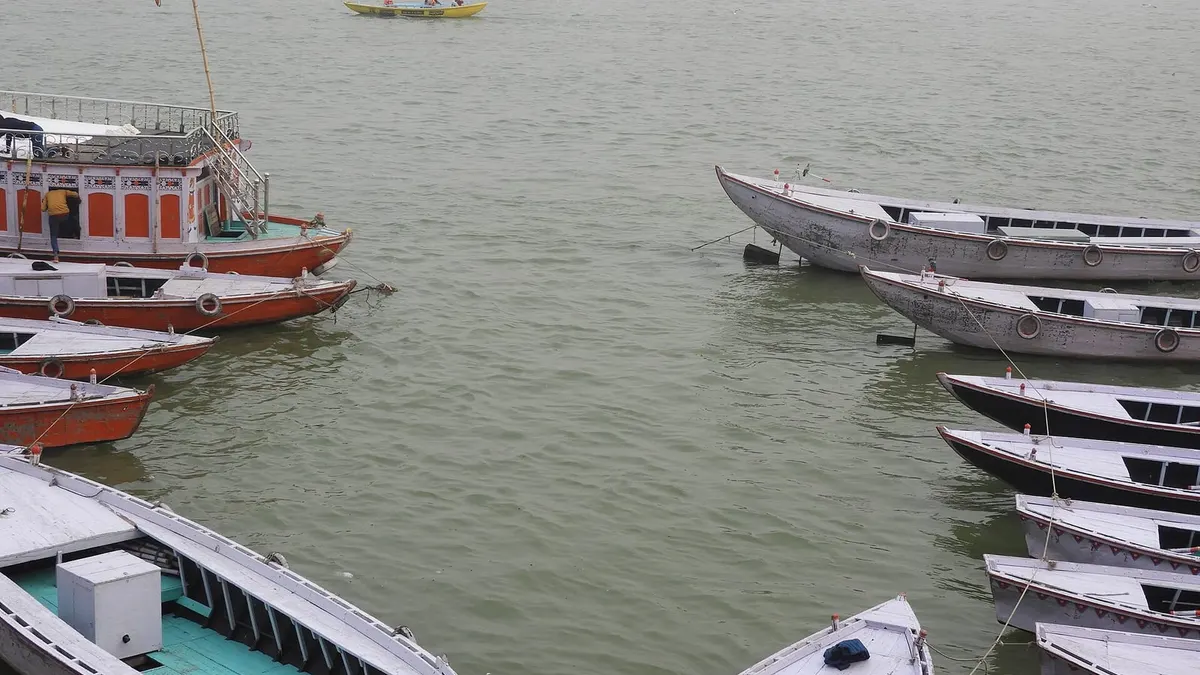
The lane is barely wide enough for two people, and four are trying to pass: a priest with a brass pot, a woman carrying marigolds, a cow, and you. Somebody shouts "Har Har Mahadev" and the whole lane answers. Then the lane opens out into the stone courtyard of the new corridor, the river is suddenly visible below, and above you is the gold-plated spire of Kashi Vishwanath.
The story of the place
In the tradition, Kashi is the city Shiva never leaves. Its old name, Avimukta, means "never forsaken", and the Kashi Khanda of the Skanda Purana praises it at length. Vishwanath, "Lord of the universe", is one of the twelve Jyotirlingas, the places where Shiva is worshipped as light.
The most famous belief about Kashi is about death. The tradition says that a person who dies in Kashi receives liberation, and that Shiva himself whispers the name of Rama, the taraka mantra, into the ear of the dying. That is why, for centuries, the old and the very ill have come to Varanasi to spend their last days, and why the cremation ghats at Manikarnika burn day and night.
The temple has been destroyed and rebuilt more than once. The present temple was built in 1780 by Rani Ahilyabai Holkar of Indore, and its spire and dome were covered in gold given by Maharaja Ranjit Singh of Punjab in the nineteenth century. In 2021 the Kashi Vishwanath Dham corridor opened, linking the temple directly to the Ganga ghats, with wide courtyards where the cramped lanes used to be.
What devotees pray for here
People come to Kashi Vishwanath at every stage of life: for a family's protection, a child's future, a parent's health, relief from a long trouble. Many make the visit after a death in the family, combining darshan with rites for the departed at the ghats. And many come simply to say they have seen Baba Vishwanath once in their life. These are beliefs and traditions; the temple promises nothing, and you need no special reason to go.
How darshan works
- Hours: the official trust site gives the temple as open from about 3 a.m. to 11 p.m., with the Mangala Aarti before dawn. General darshan is free.
- Booking: tickets for the Mangala Aarti, other aartis and the paid Sugam Darshan line are sold only on the trust's official website, shrikashivishwanath.org. Prices change on festival days and in Sawan; bookings cannot be moved to another day. Ignore anyone in the lanes offering "VIP passes".
- Aartis: the Mangala Aarti before dawn, and in the evening the Saptarishi Aarti, performed by priests who stand for the seven sages, then the Shringar and Shayana aartis. The Saptarishi Aarti is the one most visitors miss and the one regulars love.
- Phones: phones and cameras are not allowed in the temple; use the lockers near the entry gates.
- Crowds: Mondays, Sawan, Mahashivaratri and the days around Dev Deepawali are the heaviest. Early mornings on weekdays are easiest.
Kashi at Dev Deepawali
Dev Deepawali falls on Tuesday 24 November 2026, Kartik Purnima. The ghats are lined with lamps at dusk, the river fills with boats, and the city is at its most crowded. If you go to the temple that day, go early in the morning and spend the evening at one ghat. Our guide to the day is Kartik Purnima and Dev Deepawali 2026.
A simple plan for one day
- Before dawn: if you have a Mangala Aarti ticket, be at the gate early with nothing but your ID and the booking. Otherwise sleep a little longer.
- Sunrise: take a boat from Dashashwamedh or Assi and go along the ghats while the city wakes up. Agree on the price and the route before you get in.
- Morning: darshan of Vishwanath through the corridor, then Annapurna next door.
- Late morning: Kaal Bhairav, by auto or e-rickshaw.
- Afternoon: rest. Varanasi is tiring, and the lanes are hard on knees.
- Evening: the Ganga aarti at Dashashwamedh, or the quieter one at Assi. Come back to the temple for the Saptarishi Aarti if you booked it.
Wear shoes you can slip off easily; you will take them off many times.
The best season
October to March is the best time to visit: November for Dev Deepawali, February or March for Mahashivaratri. Summers are very hot, and the monsoon (July and August) floods the lower ghats, though Sawan brings huge crowds of kanwariyas.
How to reach
Varanasi has an international airport at Babatpur, about 25 kilometres from the city, and two main railway stations, Varanasi Junction (Cantt) and Banaras, with trains from most of India. From the stations, take an auto or e-rickshaw to Godowlia or Maidagin, and walk the last part to the temple gates.
Two shrines most visitors miss
Annapurna: a few steps from Vishwanath is the temple of Annapurna, the goddess who feeds the world. The tradition says that nobody in Kashi goes hungry because of her. Many pilgrims make it a rule to see her right after Vishwanath.
Kaal Bhairav: about a kilometre north stands the temple of Kaal Bhairav, called the kotwal (guardian) of Kashi. An old custom says you should take his permission when you arrive in the city, and visit him before you leave. People tie a black thread from his temple on their wrist.
If you can't travel
On a Monday evening, light a lamp and sing:
- Kashi Vishveshvara Stotram
- Kashi Panchakam
- Shri Kashi Vishvanatha Suprabhatam, for the morning
- Dvadasha Jyotirlinga Stotram
- Annapurnashtakam, for Annapurna
Every page has Read in for your own script, and a large-text mode for singing together.