Kedarnath: the story of the temple, how darshan works, and where Baba Kedar spends the winter
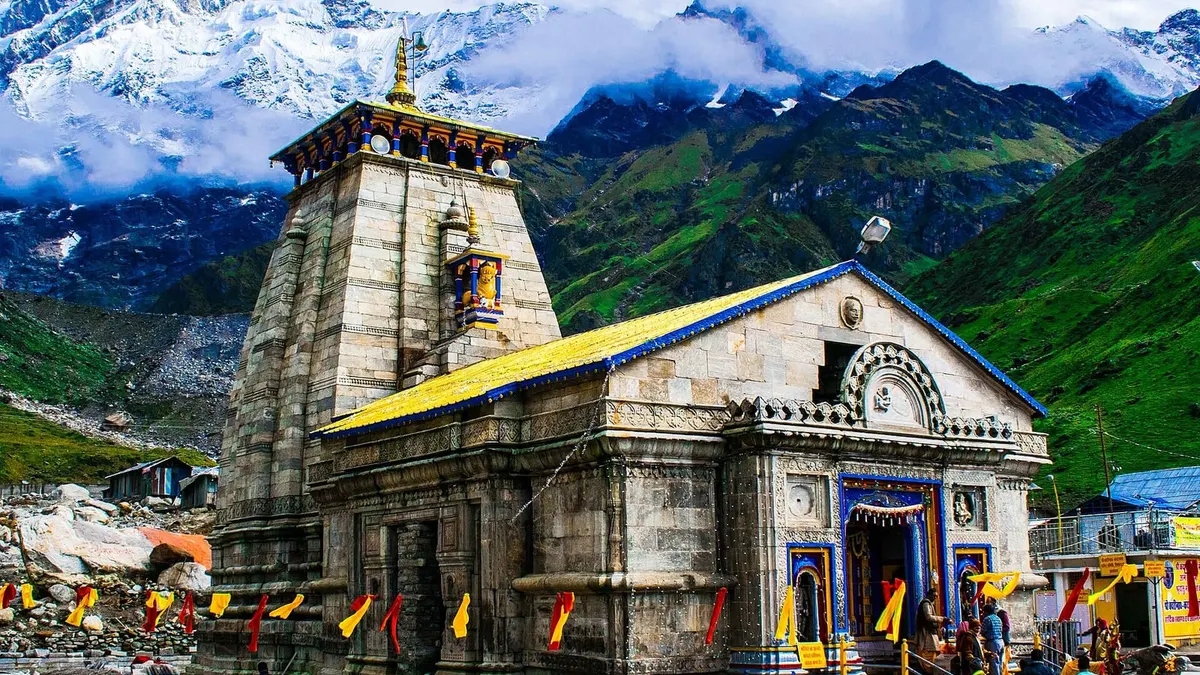
At 3,583 metres the air is thin enough that people walk slowly without being told to. Pilgrims who started from Gaurikund before dawn come round the last bend of the path, see the grey stone temple with the mountains standing behind it, and stop. Some cry. Most just stand there for a minute, breathing hard, before they join the queue.
This week that scene ends for the year. By long custom Kedarnath closes for the winter on Bhai Dooj, and reports for 2026 give Wednesday 11 November for the closing (the Badri-Kedar Temple Committee announces the final date). The temple will reopen in late April or May 2027.
The story of the place
The story the temple tells is a Himalayan tradition, not an episode from the Mahabharata text itself, and it begins after the Kurukshetra war. The Pandavas wanted Shiva's forgiveness for the killing of their own kin. Shiva did not want to be found, so he took the form of a bull and hid among the cattle in the Himalaya. Bhima recognised him and grabbed at the bull as it sank into the ground. The hump stayed above the earth at Kedarnath.
The rest of the body, the tradition says, appeared at four other places: the arms at Tungnath, the face at Rudranath, the navel at Madhyamaheshwar and the hair at Kalpeshwar. Together they are the Panch Kedar, and devout pilgrims try to visit all five.
That is why the lingam at Kedarnath does not look like the smooth lingams of most temples. It is a rough, three-sided rock, wider at the base. Priests still rub it with ghee, which the tradition links to Bhima's remorse after he wrestled with Shiva.
Kedarnath is also one of the twelve Jyotirlingas, and it is tied to Adi Shankaracharya. Many hagiographies say he attained samadhi here, and a samadhi shrine with his statue stands behind the temple.
What devotees pray for here
Kedarnath is less a temple for wishes than for setting things right. Because of the Pandava story, people come with something they regret, with a vow they made in a hard year, or to pray for a parent who has died. A long-held belief says the pilgrimage itself washes away past wrongs and brings one closer to liberation. Families also come to give thanks after an illness or a recovery, and many bring ghee to offer.
Treat all of this as faith and tradition, not as a promise. Most people who make the climb say the change they notice is inside them.
How darshan works
- Registration: every Char Dham pilgrim must register with Uttarakhand Tourism before the trip. Do it online when registration opens in spring, and carry the registration on paper too.
- The queue: in May and June, and in the weeks after the monsoon, the general queue can take several hours. The quietest times are usually late in the season, in October.
- Pujas: the special pujas (abhishek and others) are booked through the Badri-Kedar Temple Committee's official website. Do not pay agents who promise "VIP darshan".
- Phones: mobile phones, cameras and filming are banned inside the temple premises. Since 2026 phones are deposited at a counter or locker before you enter. Take your photos from the approach path.
- Clothes: dress for the cold and the rain, even in June. Warm layers, a rain jacket, good walking shoes.
Getting there
The road ends at Gaurikund, about 210 kilometres from Rishikesh. From there it is a walk of about 16 to 17 kilometres uphill, six to eight hours for most people, with ponies and palkis for hire. Helicopters fly from the Phata, Sersi and Guptkashi helipads; book only through the official IRCTC heli-yatra site, because fake booking pages appear every season. The nearest airport is Jolly Grant at Dehradun and the nearest major railway station is Rishikesh.
Spend a night at Guptkashi or Sonprayag on the way up so your body can adjust to the height. If you have heart or lung trouble, see your doctor before you book.
The best season
May and June are busiest. July and August bring monsoon landslides, and the yatra is sometimes stopped. September and October are clear, cold and calmer, and many seasoned pilgrims prefer them.
Where Baba Kedar goes in winter
When the doors close, the movable festival image (utsava murti) of Kedarnath is placed in a decorated palanquin, the panchmukhi doli, and carried down the mountain by devotees and the army band. It stops at Rampur and at the Vishwanath temple in Guptkashi, and reaches the Omkareshwar temple at Ukhimath, where Kedarnath is worshipped through the winter. Ukhimath stays open and is reachable by road, so if you are in Uttarakhand between November and April, you can still have darshan of Baba Kedar there.
The opening date for next season is usually announced on Mahashivaratri at Ukhimath.
A detail most visitors miss
Walk round to the back of the temple and look for a large boulder. In the floods of 16 and 17 June 2013, which destroyed much of the town, a rock came down with the water and lodged behind the temple, splitting the flow of debris around it. The temple stood. Pilgrims now worship the rock as Bhim Shila. People touch it, leave flowers, and tell the story to anyone standing nearby.
One more: the chief priest of Kedarnath, the Rawal, comes from the Veerashaiva community of Karnataka, two thousand kilometres away, by an old arrangement. The daily pujas are done by his assistants on his instructions.
If you can't travel
You can keep Kedarnath close from home. Light a lamp on a Monday evening and sing one of these:
- Dvadasha Jyotirlinga Stotram, which names Kedar among the twelve
- Rudrashtakam
- Shiva Panchakshara Stotram
- Lingashtakam
- Mahamrityunjaya Mantra
Every prayer page has Read in for your own script and a large-text mode for singing. If you plan to make the climb next year, start walking every morning now. Your knees will thank you in May.