Sabarimala: the 41-day vratham, the irumudi, the eighteen steps, and how to book darshan this season
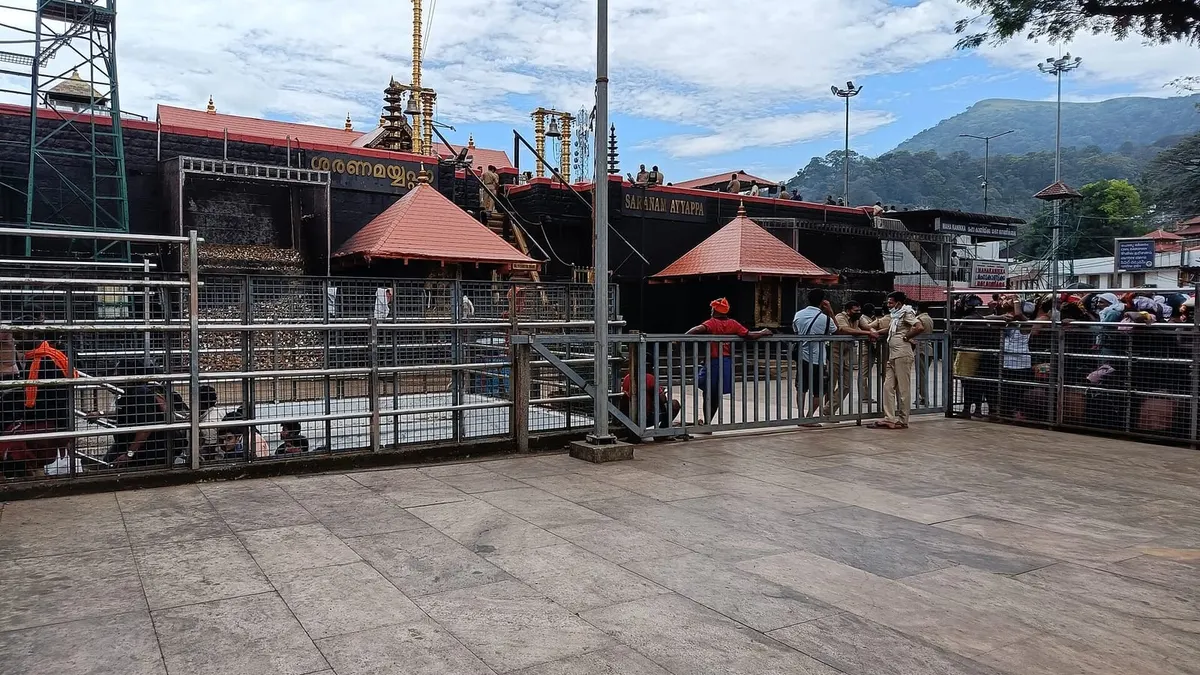
In November, men in black dhotis start showing up everywhere in south India: at railway stations, in office lifts, at the tea shop. They are barefoot, unshaven, and they call each other "Swami". If you ask one of them his name, he may just say "Swami" again and smile. They are keeping the vratham for Sabarimala, and the season starts this weekend.
The dates
Reports of the Travancore Devaswom Board (TDB) schedule give these dates for the 2026-27 season. The board can change them, so check its notice before you travel:
- Mandala season opens: evening of Monday 16 November 2026 (the start of the Malayalam month of Vrischikam)
- Mandala Pooja: Sunday 27 December 2026, after which the temple closes for a few days
- Reopens for Makaravilakku: 30 December 2026
- Makaravilakku: mid-January 2027, at Makara Sankranti
The story of the place
Sabarimala's story is a Kerala tradition; it is not told in the major Puranas, and it is kept alive by the temple, the Pandalam royal family and generations of pilgrims. Ayyappa (Manikandan) is the son of Shiva and Mohini, the female form of Vishnu. He was born to defeat the demoness Mahishi. The childless king of Pandalam found the infant on the banks of the Pampa with a bell (mani) around his neck, and raised him as his son. When the queen, wanting the throne for her own son, pretended to be ill and asked for tigress's milk as a cure, the boy went into the forest and came back riding a tigress. After defeating Mahishi, he chose to sit in meditation on the hill of Sabarimala as a celibate yogi, and that is how he is worshipped there: seated, with a band around his knees.
The Pandalam family still holds a special place. For Makaravilakku, the sacred ornaments (thiruvabharanam) are carried from the Pandalam palace to Sabarimala on foot, over three days, and placed on the deity.
What devotees pray for
People take the vratham for all kinds of reasons: a job, a child's health, a family crisis, or simply because their father did it every year. Many say the 41 days of discipline are the real prayer, and the climb is its end. Ayyappa is also prayed to for courage, for protection on journeys, and for the strength to keep a promise. This is faith and family tradition; the temple promises nothing, and the regulars will tell you that a vratham kept for show misses the point.
The vratham: what pilgrims keep
- 41 days of discipline before the climb (the Mandala), starting with putting on the mala (a rudraksha or tulasi bead garland) at a temple, usually from a guru swami who has made the pilgrimage many times.
- Dress: black, blue or saffron clothes.
- Food and habits: vegetarian food, no alcohol or tobacco, celibacy, no shaving or cutting hair, sleeping on the floor in many families, and a bath and prayer morning and evening.
- Speech: every pilgrim is addressed as "Swami" or "Ayyappa", whoever he is.
First-time pilgrims are called kanni swami. They are looked after by the group's guru swami, who teaches them the rules and leads the bhajans.
The irumudi
No pilgrim climbs the eighteen holy steps without the irumudi, a two-compartment cloth bundle carried on the head. One part holds the offerings for the deity, including a coconut filled with ghee; the other holds the pilgrim's food for the journey. The ghee is poured over the deity as the neyyabhishekam, and the empty coconut is thrown into the large fire (aazhi) near the steps. The irumudi is packed in a ceremony (kettunira) at a temple or home before the journey.
How darshan works now
- Book a slot: darshan is through the virtual queue on the official site, sabarimalaonline.org. Booking for this season opened on 29 October, and reports give a daily cap of 80,000 pilgrims. Reports differ on whether spot booking at Pampa will be available this year, so do not travel without a booking.
- The climb: from Pampa, the trek to the Sannidhanam is about 5 kilometres uphill through the forest, by the Neelimala path. Older pilgrims rest at Sabaripeedam and Saramkuthi on the way.
- The eighteen steps (pathinettam padi): only pilgrims carrying the irumudi climb them. Others use a separate path to the sanctum.
- Hours: the temple opens before dawn and closes at night, when the lullaby "Harivarasanam" is played as the sanctum doors close. Check the TDB notice for the season's timings.
- Photography: no photographs of the sanctum. Phones may be checked.
Who goes
By the temple's tradition, women between about 10 and 50 do not make the pilgrimage, because of Ayyappa's vow of celibacy. In 2018 the Supreme Court ruled that women of all ages may enter; the matter was later referred to a larger bench and is not finally settled. In practice, girls under 10 and women over 50 make the trip with their families, and they are called malikappuram, after the goddess whose shrine stands near the main temple.
How to reach
The nearest railway station is Chengannur (roughly 80 to 90 kilometres from Pampa by road), with Kottayam and Thiruvalla also used. The nearest airports are Kochi and Thiruvananthapuram. KSRTC runs special buses to Pampa from all over Kerala during the season. Private vehicles stop at Nilakkal, and shuttle buses take pilgrims on to Pampa.
A detail most visitors miss
Many pilgrims on the traditional route stop at Erumeli before the climb, where they dance the petta thullal with painted faces, and then visit the shrine of Vavar, Ayyappa's Muslim companion in the tradition, before going to the Ayyappa temple across the road. There is a Vavar shrine at the Sannidhanam too. It is one of the few places where a Hindu pilgrimage formally honours a Muslim saint, and the pilgrims do it without a second thought.
If you can't travel
Many families who cannot go keep a short vratham at home in the season, or simply light a lamp each evening of the Mandala and sing:
- Om Jai Shiv Omkara or Om Jai Jagdish Hare, for Ayyappa as the son of Hara and Hari
- Vishnu Sahasranama Stotram
- Shiva Panchakshara Stotram
Ayyappa temples and samajams in Indian cities and abroad hold mala-wearing ceremonies, bhajans and irumudi kettunira through the season. If you want to start the vratham this year, call your nearest one this week.
Swamiye saranam Ayyappa.