Sandhyavandanam in 15 minutes before college or office: a beginner's map
कॉलेज या ऑफ़िस से पहले 15 मिनट में संध्यावंदन
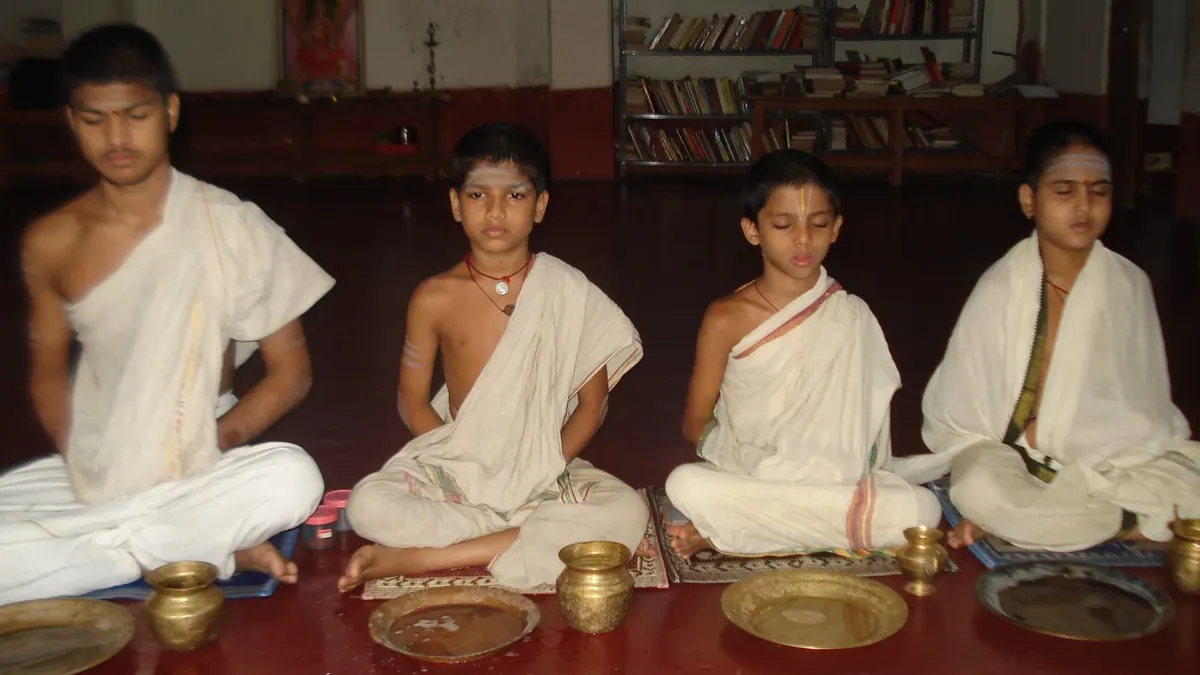
Your alarm goes off at 6:40. Class is at 8:30, or the cab comes at 8:15. Somewhere in that rush is the sandhya your grandfather never once missed, and it feels like a mountain.
It is smaller than it looks. Most of it is simple physical steps in a fixed order. Once the order is in your head, 15 minutes is enough on a weekday.
No mantras here, on purpose
You will not find mantras or meanings in this post.
The words of your sandhya come from your own family's line, and they change with the Veda your family follows. A Rig Vedi family and a Yajur Vedi family say different lines, and both are right. So learn the words from someone in your family, your acharya, or the printed book your family uses. Ask them how they do it. Most elders are delighted to be asked.
Sandhyavandanam is traditionally done by those who have had their upanayanam. If you haven't had yours, or you aren't sure what applies to you, talk to your elders first.
What this post gives you is the map. It covers what to keep ready, the usual order of the steps, and how to fit them into a busy morning.
Keep a small kit ready
Put these in one place the night before. At 6:45 you do not want to be hunting for the uddharini.
- a small vessel of water and a spoon (the panchapatra and uddharini, if you have them)
- a small plate to receive the water you offer
- a mat or a cloth to sit on
- your sandhya book, or the notes your elder wrote for you
Bathe first. Wear clean clothes. In the morning, face east if you can.
The usual order
Families differ in the details, but most morning sandhyas move through these parts:
- Achamana. Sipping a little water, three times, with the names you were taught.
- Pranayama. Steady breathing, held and released as your tradition teaches.
- Sankalpa. Saying what you are about to do, with the day and the place.
- Marjana. Sprinkling water on yourself.
- Arghya. Offering water towards the Sun.
- Gayatri japa. The heart of it. Sit still, and repeat the Gayatri the number of times your family keeps.
- Upasthana. Standing prayers to the Sun, and the closing.
If your book has more steps, your book wins. This list is only there so you can see the shape.
A 15-minute plan
| Minutes | What you do |
|---|---|
| 0–2 | Sit down, set out the kit, settle your breath |
| 2–5 | Achamana, pranayama, sankalpa |
| 5–7 | Marjana and arghya |
| 7–13 | Gayatri japa |
| 13–15 | Upasthana and closing |
The japa gets six minutes, the biggest block, so guard it. On a bad day, if something has to be shorter, ask your elder which part can be. Don't guess.
Making it stick
Do it at the same time and in the same place: after your bath, before you pick up your phone. After a few weeks the habit remembers for you.
Set the alarm 20 minutes earlier, not 15. You will need the extra five.
Start on the weekdays you are at home. Hostel mornings and travel days are harder, so ask your elders what they do on those days.
And tell one friend who does sandhya, or is trying to. It is much easier to keep going when someone asks, "Did you do it today?"
Where Sanatan Bhakt can help
The Gayatri Mantra page has the text in Devanagari. Under Read in, you can see it in Tamil, Telugu, Kannada, Malayalam, Bengali and other scripts. Check it against your family's book before you rely on it.
If Devanagari is slow going for you, the Devanagari lessons will help you read your sandhya book with confidence.
Tap Save on any page you open every morning. It shows up under Your songs on the home page, on your phone only.
Start tomorrow morning. Fifteen minutes is enough.