Guruvayur: the Krishna temple of Kerala, its dress code, the thulabharam, and Guruvayur Ekadashi
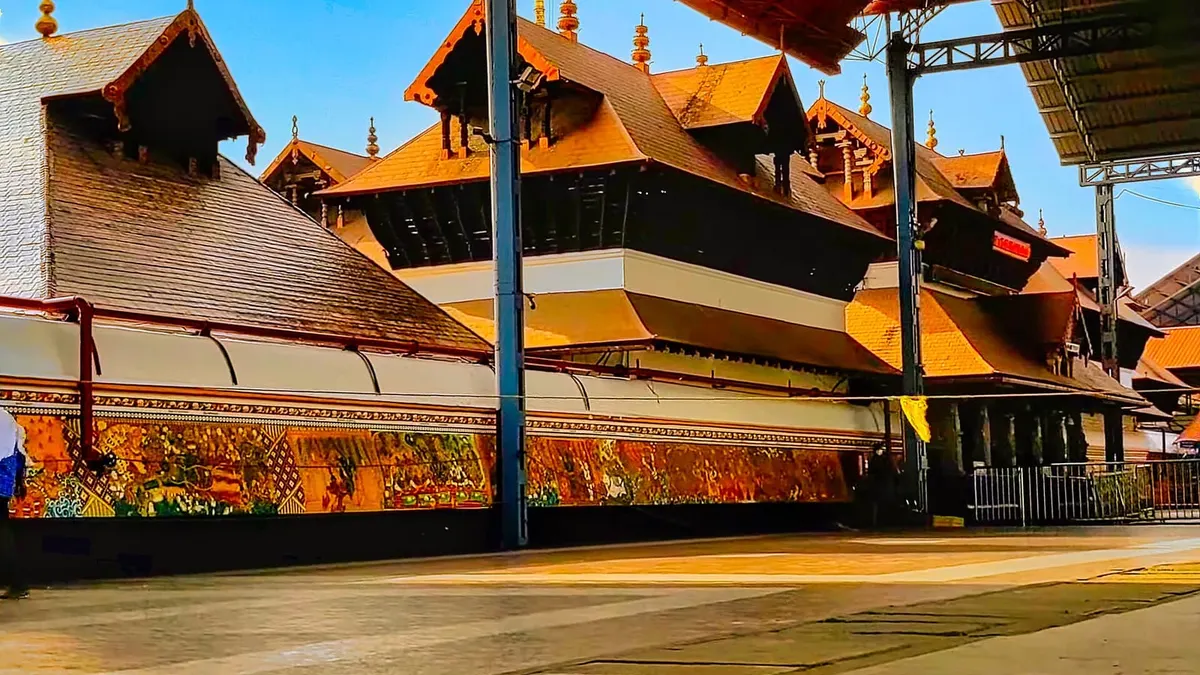
It is three in the morning in Guruvayur and the queue is already long. Men stand bare-chested in white mundus, women in set-saris with jasmine in their hair, a grandfather holding a sleeping baby who is about to have his first rice. Inside, the sanctum doors open for the nirmalyam, the first darshan of the day, when the deity is seen with the flowers and sandal of the night before. A murmur goes down the line: "Guruvayurappa."
The date to know
Guruvayur Ekadashi: Saturday 21 November 2026 (Drik Panchang and other calendars agree). It is the Ekadashi of the bright fortnight in the Malayalam month of Vrischikam, the temple's most important day of the year, and this year it falls on the same day as the Vaishnava Devutthana Ekadashi.
The story of the place
The temple's tradition says the image worshipped here is very old: that it was worshipped by Vasudeva and Devaki and later by Krishna himself at Dwarka. When Dwarka was about to be swallowed by the sea, Krishna asked his friend Uddhava to see that the image was saved. Brihaspati (Guru), the teacher of the gods, and Vayu, the wind, carried it south and installed it on the bank of a lake here with Shiva's blessing. Guru plus Vayu gave the town its name, Guruvayur. This is the temple's own tradition, handed down in Kerala, not an episode from the Bhagavatam.
The deity, Guruvayurappan, is Vishnu with four arms, holding the conch, discus, mace and lotus, worshipped as the child Krishna. The image is said to be made of a rare black stone called patala anjanam.
Two great Malayalam devotees are tied to the temple. Melpathur Narayana Bhattathiri wrote the Sanskrit Narayaneeyam here in 1586; the tradition says he was suffering from crippling rheumatism and was cured as he finished it. His contemporary Poonthanam, a simple man the scholars looked down on, wrote the Jnanappana in Malayalam, and the tradition says Guruvayurappan preferred Poonthanam's devotion to Melpathur's learning.
What devotees pray for here
Guruvayur is the temple Malayali families go to at every turning point of life, and the offerings show it:
- Choroonu: a baby's first feeding of rice, done in the temple, often in the hundreds on a busy morning.
- Weddings: short ceremonies at the mandapams in front of the temple. On auspicious days there are more than a hundred.
- Thulabharam: a devotee is weighed on a large balance against bananas, sugar, jaggery, coconuts or other goods, which are then offered. It is usually done as thanks for a prayer answered, often after recovery from an illness.
- Recovery and health: because of the Narayaneeyam story, many people pray here for healing, and some read the Narayaneeyam at home as a vow during illness.
All of this is devotion and family custom. Nobody at the temple will promise a cure or a result.
How darshan works
- Hours: the temple opens at 3 a.m. and closes at about 9:15 p.m., with a break in the afternoon. Senior citizens have a separate early-morning darshan window. Times change on festival days; check with the Guruvayur Devaswom.
- Dress code: men wear a mundu (dhoti) with no shirt or vest; a small cloth over the shoulder is usually allowed. Women wear a saree, a set-mundu, a long skirt and blouse, or a salwar kameez. No jeans, shorts or lungis. You can buy a mundu in the shops on East Nada.
- Who may enter: by the temple's rule, only Hindus are allowed inside.
- Phones: not allowed inside. Deposit counters are near the entrances.
- Queues: weekends, Malayalam month starts and the Ekadashi season are the most crowded. Special darshan tickets are sold by the Devaswom; don't pay touts.
Guruvayur Ekadashi and the Chembai festival
The Ekadashi month at Guruvayur is a season of its own. For about two weeks before Ekadashi, the Chembai Sangeetholsavam runs at the temple: a Carnatic music festival in memory of the singer Chembai Vaidyanatha Bhagavatar, in which thousands of musicians, from famous names to schoolchildren, each get a few minutes to sing before Guruvayurappan. On Ekadashi itself the temple stays open through the day and night, there is a grand elephant procession, and many devotees fast.
The best season
November to February is cooler, and the Ekadashi season is the most festive. The temple's annual festival (Ulsavam) is in February or March and begins with the aanayottam, an elephant race. The monsoon months, June to August, are quieter.
How to reach
Guruvayur has its own railway station, with trains from Thrissur and Ernakulam. Thrissur, about 25 kilometres away, is the main rail hub. The nearest airport is Kochi (about 80 kilometres); Kozhikode is also used. KSRTC buses run from all over Kerala.
A detail most visitors miss
About three kilometres from the temple is Punnathur Kotta, an old palace where the temple's elephants live, several dozen of them, all offered to Guruvayurappan by devotees. The most famous, Guruvayur Keshavan, is remembered with a statue at the temple. Go in the morning when the elephants are bathed.
The other thing to see is Krishnanattam, a dance drama on Krishna's life performed as an offering at the temple at night. Devotees book a particular episode as a vazhipadu (offering). Ask at the counter which play is on that week.
If you can't travel
Light a lamp before a picture of Krishna, and sing one of these:
- Mukunda Mala, written by Kulasekhara Alvar, a king of Kerala
- Vishnu Sahasranama Stotram
- Govindashtakam
- Krishnashtakam
- Achyutashtakam
If you are keeping the fast on Ekadashi, the Devutthana Ekadashi page has the dates for India, Toronto and Vancouver, with the parana times where two calendars agree.