Narak Chaturdashi 2026: the dawn oil bath, Kali Chaudas, and why it shares a day with Diwali
नरक चतुर्दशी 2026: अभ्यंग स्नान, काली चौदस और छोटी दिवाली
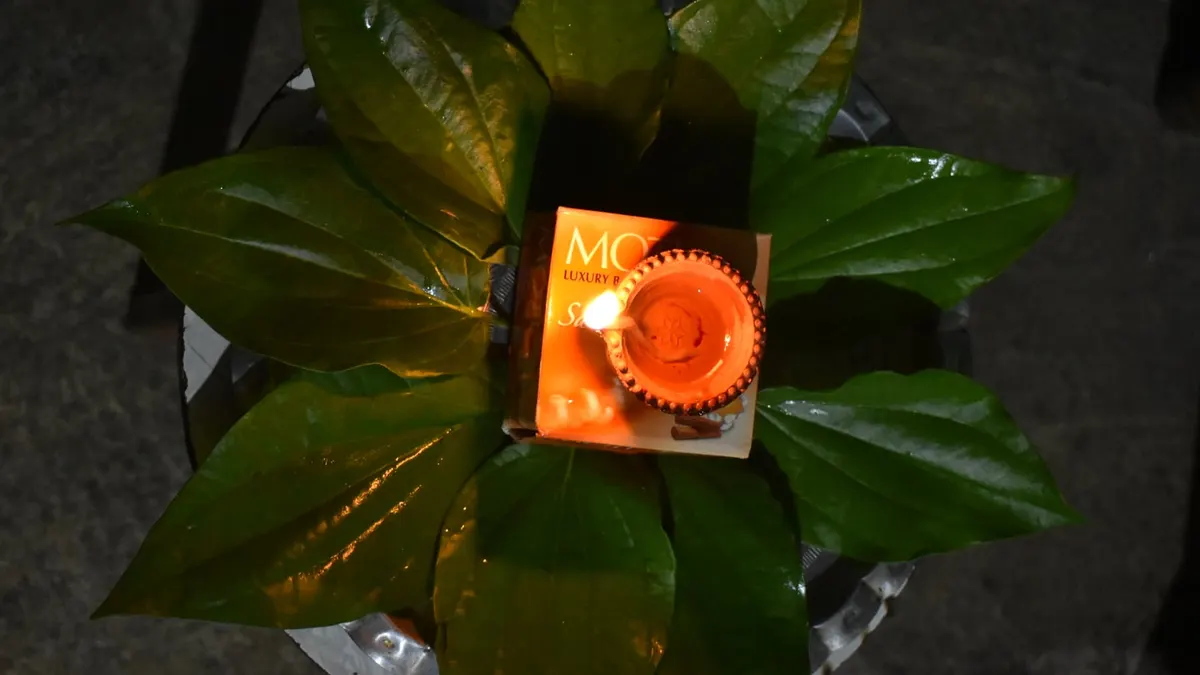
It is still dark. Someone is warming a small katori of sesame oil on the stove, and a bowl of ubtan (besan, haldi, a little milk) is waiting by the bathroom door. Nobody is allowed to sleep in today. In a lot of homes the first sound of Diwali is not a cracker. It is a grandmother saying "uth jao, snan karna hai".
That is Narak Chaturdashi, also called Choti Diwali, Roop Chaudas and, in Gujarat, Kali Chaudas. This year it has a twist.
The dates this year (India, IST)
| What | When |
|---|---|
| Kali Chaudas (night worship) | Saturday night, 7 November |
| Narak Chaturdashi, the dawn bath | Sunday, 8 November, before sunrise |
| Diwali, Lakshmi puja | Sunday, 8 November, evening |
Yes, Choti Diwali and Diwali fall on the same Sunday in India. The reason is the clock. Chaturdashi, the 14th lunar day, begins on Saturday morning (7 November) and ends late on Sunday morning. The dawn bath needs chaturdashi to be running before sunrise, and that happens on Sunday. Amavasya, the new moon, then begins before Sunday evening, so the Lakshmi puja is that evening too. Kali Chaudas is reckoned by midnight, and the midnight that falls inside chaturdashi is Saturday's.
Drik Panchang and PanchangBodh agree on all three for New Delhi. The Narak Chaturdashi page and the Diwali page have the festival details.
So on Sunday you will do the oil bath at dawn and the Lakshmi puja at dusk. Long day. Eat a proper lunch.
Why "Narak"
The site's festival page puts it in one line: "The day before Diwali (Chhoti Diwali), remembering Krishna’s victory over the demon Naraka." Narakasura was killed and the women he had imprisoned were set free. The bath, the lamps and the crackers are, in the popular telling, the town cleaning itself up and celebrating.
Songs for Krishna suit the morning: Aarti Kunj Bihari Ki or Krishnashtakam.
Abhyanga snan: the dawn bath
This is the centre of the day. The rule is simple: bathe before sunrise, while chaturdashi is still running. In New Delhi on 8 November sunrise is at about 6:38 AM, so the bath happens before that. Everywhere else, use your own sunrise (the Sandhya times tool on the Nitya Karma page shows it for many cities).
How families do it:
- Oil. Warm sesame oil (or the medicated oil your family uses) is rubbed into the scalp and the whole body. In many homes an elder does it for the children.
- Ubtan. After the oil sits a while, a paste of gram flour, turmeric and milk or rose water is rubbed off with the hands. In Maharashtra this is utane, and the box of utane and a new bar of fragrant soap are part of the Diwali shopping.
- Bath. A full bath with hair washed.
- New clothes, kajal, a tilak. Many families put a little kajal in the eyes after the bath, believed to keep off the evil eye.
- A lamp and a bow at the puja place before breakfast.
People believe the bath washes away what would otherwise lead to "naraka", hell. That is the reason given for it in most homes. Treat it as a family custom and a lovely start to the day, not as a threat.
The Yama lamp, again
Many families light a south-facing lamp for Yama on Dhanteras evening. Some light another on chaturdashi evening. This year that would be Saturday evening, 7 November, when chaturdashi is running. If your family does this, the method is the same as on Dhanteras: a diya outside the main door, the flame turned to the south. Our Dhanteras guide explains it step by step.
Kali Chaudas and Hanuman
In Gujarat the night of chaturdashi is Kali Chaudas. Many families worship Mahakali; many also worship Hanuman, and some their kuldevi or Bhairava. The worship is at night, because the festival is fixed by which night has chaturdashi at midnight. This year that is Saturday, 7 November.
Customs you will hear about, which vary a lot from family to family:
- Vadas or other fried food are made, and in some homes a little is set out at a crossroads at night.
- A lamp is placed at a crossroads or outside the home.
- Children get a dot of kajal for protection.
In parts of north and west India Hanuman is worshipped on this day too, and coconuts, and prasad of sesame, jaggery and poha, are offered to him. If that is your custom, sing the Hanuman Chalisa and Aarti Kije Hanuman Lala Ki. For Kali, Ambe Tu Hai Jagdambe Kali is on the site.
Around India
- Tamil Nadu and much of the south. This morning is Deepavali itself. The oil bath before dawn, new clothes, crackers and sweets all happen today, and the Tamil greeting is "Ganga snanam aacha?", "Have you had your Ganga bath?"
- Karnataka and Maharashtra. Deepavali begins with the early oil bath and aarti for the family, and runs on to Bali Pratipada.
- Goa. Huge paper effigies of Narakasura, stuffed with grass and crackers, are built in the neighbourhoods and burnt before dawn. After the bath, a bitter wild berry is crushed underfoot, standing for Narakasura's defeat.
- Bengal. It is Bhoot Chaturdashi, the night before Kali Puja. Families light 14 lamps around the house, in doorways and dark corners and by the tulsi, for 14 generations of ancestors, and eat choddo shaak, a dish of 14 leafy greens.
- Rajasthan and the north. As Roop Chaudas, the ubtan and the bath are the point: it is a day for looking after yourself before the big evening.
In North America
Here we are honest: we cannot give you a confirmed date. The bath goes on the morning when chaturdashi is running before your sunrise, and Eastern or Pacific time can make that a different morning from India's. One calendar we checked gives a different day for Toronto and New York than for India, and we could not confirm it with a second. Ask your local temple which morning they keep, and use your own sunrise.
The practical side is easier. Sunrise in Toronto is around 7 AM in early November, so a bath before sunrise is not as brutal as it sounds. Warm the bathroom first. Warm the oil in a small steel bowl standing in hot water, not on the stove, if you have children helping.
Checklist for the morning
- Sesame oil, warmed
- Ubtan: besan, haldi, milk or rose water (or a ready box of utane)
- A towel you don't mind staining yellow
- New or freshly washed clothes
- Kajal, if your family uses it
- A diya and agarbatti for the puja place
- Something sweet for breakfast
Questions people ask
Is Choti Diwali the same as Narak Chaturdashi? Yes, in most of north India the two names mean the same day. This year in India it falls on the same date as Diwali itself.
Can I take the oil bath after sunrise if I oversleep? The custom is before sunrise. If you miss it, bathe anyway and light your lamp. The day isn't lost.
Is Kali Chaudas the same as Narak Chaturdashi? They fall on the same chaturdashi but are fixed differently: the bath by dawn, Kali Chaudas by midnight. This year they land on different days: Saturday night for Kali Chaudas, Sunday dawn for the bath.
Do I light the Yama lamp twice? Only if your family does. Dhanteras evening is the main one in most panchangs.
Read the Diwali week overview for all five days, or go straight to our Diwali puja guide for Sunday evening.