Dhanteras 2026: the Yama lamp, the 13 diyas, and what to do this evening
धनतेरस 2026: यम दीपक, 13 दीये और आज शाम की पूजा
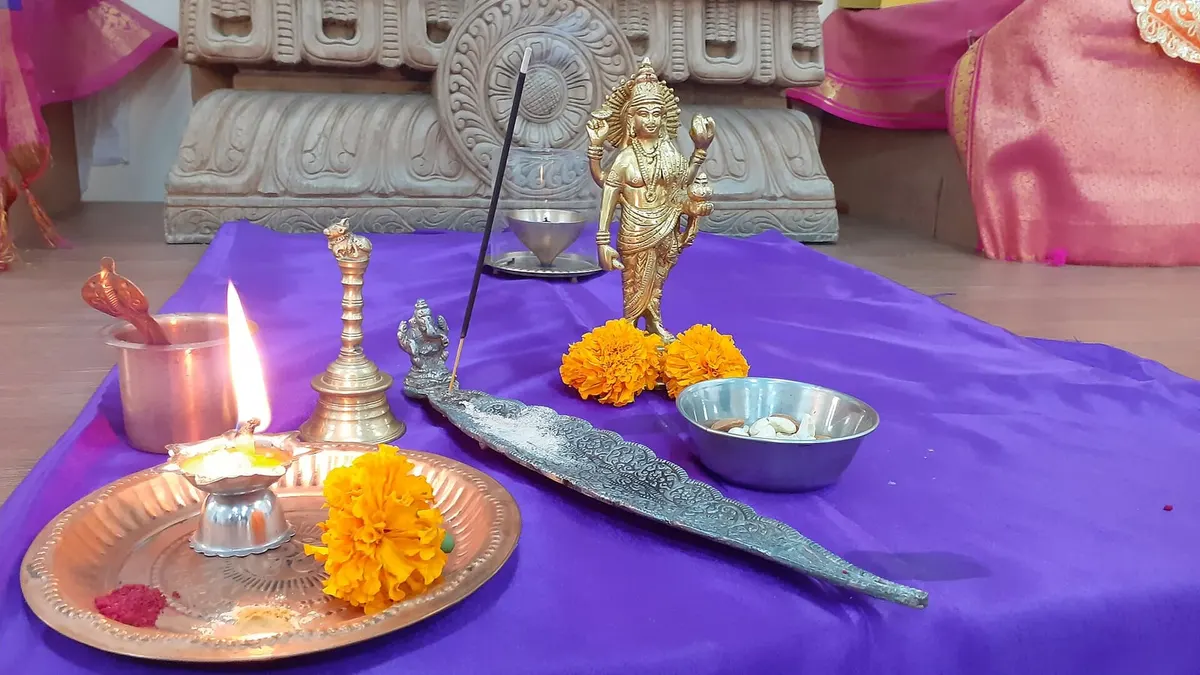
Somebody has just come back from the market with a steel kadhai, a packet of whole dhaniya and a new broom wrapped in newspaper. Somebody else is asking where the old clay diyas went. That is Dhanteras in most homes: half shopping, half puja, and one small lamp that matters more than people realise.
This guide covers that lamp (the Yama deepam), the 13 diyas, what families buy and why, and a simple puja you can finish before dinner. For the whole week at a glance, see our Diwali week guide.
The date
| Place | Dhanteras 2026 |
|---|---|
| India (IST) | Friday, 6 November |
| Toronto, New York, Vancouver | Friday, 6 November |
The India date is from the site's own festival data, checked against two panchangs. For the North American cities, Drik Panchang's city pages and Daanyam's city pages both give Friday 6 November. If you live somewhere else, ask your local temple, because the evening that counts depends on when trayodashi (the 13th lunar day) is running after your own sunset. The Dhanteras page has the festival's details and the prayers we link for it.
The timing rule: after sunset, in pradosh kaal
The Dhanteras puja and lamps belong after sunset, in pradosh kaal, a window of about two and a half hours from sunset. Panchangs also mark a shorter slot inside it when Vrishabha, a fixed (sthir) lagna, is rising. Families like that slot because, as they put it, what you begin in a fixed lagna stays.
We are not printing clock times for India: they change with every city's sunset, and by the time you read this the evening may be over there. Abroad, never convert India's times. Use your own sunset: the Sandhya times tool on the Nitya Karma page gives sunset for Toronto, Edmonton, New York, San Francisco and more, or for any latitude and longitude. Start after that.
Yama deepam: the lamp for Yama
People forget this part, and it is surprisingly hard to find explained properly.
On Dhanteras evening a lamp is offered to Yama, the lord of death. Families light it so that no one in the house dies before their time. That is the belief, and it is old. The story usually told with it is of King Hima's son, who was destined to die on the fourth night after his wedding. His young wife piled her jewellery and coins at the door and lit lamps all around, and kept him awake with songs and stories. Yama came as a serpent, was dazzled by the light, sat listening on the heap of gold till morning, and went away. (If you like Yama stories, we have retold two more: Savitri and Nachiketa.)
How families do it:
- The lamp. A clay diya; in many homes a four-faced lamp with four wicks. Mustard oil is common; some families use sesame oil.
- Where. Outside the main door, on the threshold or just beside it.
- Which way. The flame faces south. South is Yama's direction in tradition, so this is the one lamp of the year that is turned that way on purpose.
- When. After sunset, in pradosh kaal. Some families light it before the Lakshmi and Dhanvantari puja, some after. Then it is left to burn.
Some families also light a south-facing lamp for Yama on the next evening, Narak Chaturdashi. Read our Narak Chaturdashi guide for that day.
The 13 diyas
Dhanteras is the 13th (teras, trayodashi) day, and many families light 13 diyas. Wheat-flour diyas are traditional in some homes. Where they go is family custom, and lists online contradict each other, so here is what most of them agree on:
- The first is the Yama lamp, outside the main door, facing south.
- One in the puja place, before Lakshmi.
- Two at the main door, one on each side.
- One at the tulsi plant.
- The rest go where the house feels dark or where it lives: the kitchen, near the drinking water, the back door, the balcony or terrace, a dark corner of the stairs.
If your mother did it differently, do it her way. That is the real rule.
What people buy, and why
The word "dhan" means wealth, so buying something on this day is part of the festival. You do not need gold.
- A metal vessel. Steel, brass or copper: a lota, a plate, a spoon. Many families don't bring it home empty: a little rice or a sweet goes in it before it is placed at the puja.
- Gold or silver. For families who buy it, a small coin is usual. It is placed in the puja, then in the cash box.
- A new broom. The broom sweeps out dirt and, as families say, poverty with it. In many homes it is also worshipped on Diwali night.
- Whole coriander seed (dhaniya). "Dhaniya" sounds like "dhan". A handful is offered in the puja, kept with the money, and later sown in a pot. In many Maharashtrian homes the naivedya is coriander seed lightly pounded with jaggery.
A ₹20 steel spoon is a perfectly good Dhanteras purchase. Borrowing to buy gold today misses the point.
A simple Dhanteras puja at home
Before sunset: sweep, wash the doorstep, draw a small rangoli, and (if it is your custom) little footprints in rice paste walking into the house.
After sunset:
- Clean the puja place and light the main diya.
- Bow to Ganesha first, as at every puja.
- Offer flowers, a little kumkum and haldi, incense and a lamp to Dhanvantari, who rose from the ocean of milk carrying the pot of nectar. Dhanteras is his appearance day. Your family may have its own Dhanvantari mantra; use that.
- Do the same for Lakshmi, and in many homes for Kubera too. Put the new vessel, the coin and the dhaniya in front of them.
- Offer naivedya: sweets, fruit, or the dhaniya and jaggery.
- Light the Yama lamp outside the door, facing south, and the other diyas.
- Sing Om Jai Lakshmi Mata, and if you have time Dhanalakshmi Stotram or Shri Suktam.
Do's and don'ts
- Do light the Yama lamp after sunset, not in the afternoon.
- Do keep every lamp away from curtains, paper lanterns and children's sleeves.
- Don't convert India's muhurat to your time zone. Use your own sunset.
- Don't leave lamps burning in an empty room.
A detail most people don't know
From 2016 to 2024 India's Ministry of Ayush kept National Ayurveda Day on Dhanteras, because it is Dhanvantari's day. In 2025 the government moved it to a fixed date, 23 September, since Dhanteras moves around the calendar. Dhanvantari is still worshipped tonight, of course; the government holiday simply moved.
Abroad, or in an apartment
- Smoke alarms. One diya near the door rarely sets one off, but six in a hallway might. Keep lamps away from the alarm and open a window a little.
- Balcony rules. Many condo buildings in Canada and the US do not allow open flames on balconies. Read your building's rules before putting the diyas out.
- The Yama lamp in a flat. Put it just inside your front door, on a steel plate, flame facing south, and stay in the room while it burns. If even that is not allowed, an electric diya facing south is a sincere offering. Many families abroad do exactly this.
- The date. Friday 6 November in Toronto, New York and Vancouver, as above. Your temple may hold its Dhanteras programme on the weekend instead; the home lamp still goes on Friday evening.
Questions people ask
Can I do Yama deepam in an apartment? Yes. Inside your front door, flame facing south, on a plate, with someone watching it. An electric diya is fine if flames are not allowed.
Do I have to light exactly 13 diyas? No. Thirteen is a lovely custom, and the Yama lamp is the one most families never skip. Light what your home and building allow.
I missed pradosh kaal. Is it too late? Light the lamps when you can, this evening. A late lamp is better than none.
Is buying gold necessary on Dhanteras? No. A steel vessel, a broom or a packet of dhaniya follows the custom just as well.
Which day is Diwali this year? Sunday 8 November in India, and Monday 9 November in the Vaishnava (ISKCON) calendar. Our Diwali puja guide walks through the evening step by step.
Shubh Dhanteras.